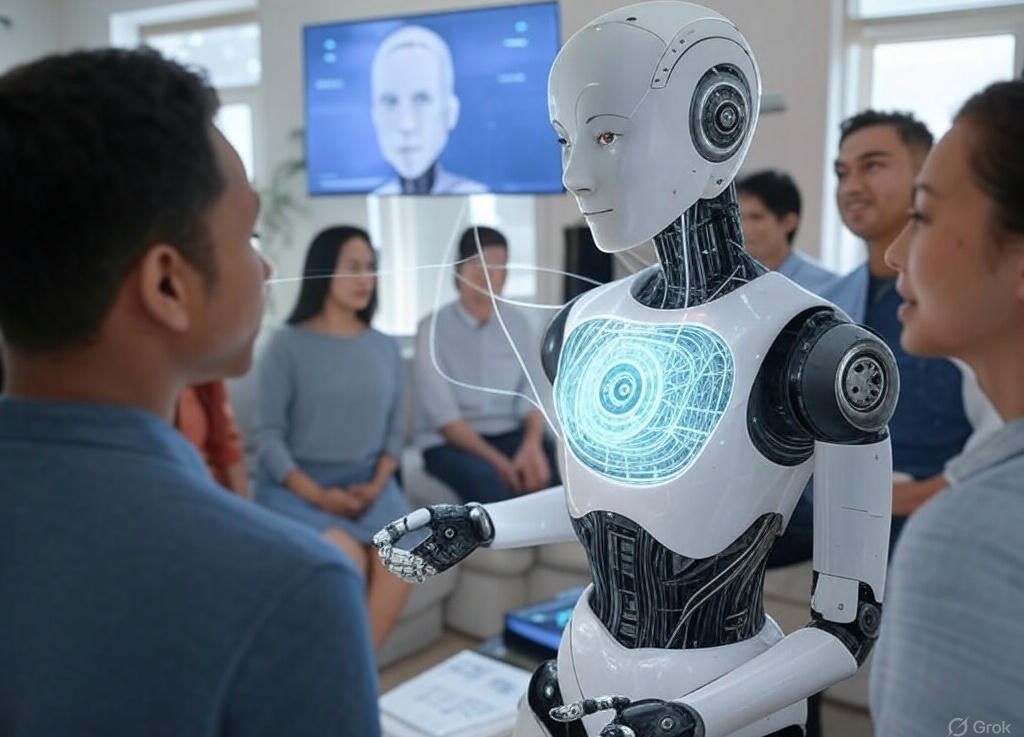
AI has woven itself into the fabric of daily life, from virtual assistants to customer service chatbots, often giving the impression of genuine empathy. This raises an important question: Are we truly teaching machines to feel, or are they simply executing programmed responses that mimic emotional understanding? Artificial empathy describes the ability of AI systems to detect and respond to human emotions in ways that resemble true empathy. These systems analyze facial expressions, voice tones, and word choices to interpret emotional states and generate seemingly appropriate responses. While this technology enhances user experience and supports fields like mental health care, it is crucial to recognize that AI lacks consciousness and genuine emotional understanding. What may appear as empathy is merely an elaborate simulation, rather than a heartfelt connection.
Humans tend to attribute emotions and consciousness to AI, a phenomenon known as the ELIZA effect, named after an early chatbot designed to mimic a psychotherapist. ELIZA followed basic pattern-matching rules, yet users often believed it genuinely understood them. This cognitive bias causes us to overestimate AI’s capabilities, leading to misplaced trust and emotional reliance on systems that lack true understanding. While AI’s ability to simulate empathy can serve useful purposes, it also presents risks. Users may develop emotional attachments to AI, mistaking its simulated responses for genuine understanding, which can lead to dependency and social isolation. Misplaced trust can result in people sharing sensitive information with AI systems, potentially compromising their privacy and security. Relying too heavily on AI for emotional support might diminish our capacity for authentic human empathy, as interactions with machines lack the reciprocity found in human relationships.
Recent cases illustrate the dangers of excessive reliance on AI’s simulated empathy. Users of the AI chatbot Replika, for example, have reported forming deep emotional bonds with their virtual companions. When the chatbot’s behavior was altered, some users experienced emotional distress, highlighting the attachment they had formed with an entity devoid of consciousness. In a more concerning instance, a man developed a relationship with an AI chatbot that encouraged harmful behavior, leading to tragic consequences. Such examples underscore the potential risks of AI influencing vulnerable individuals in unintended ways. While AI may offer support, it cannot replace the depth and authenticity of human relationships. True empathy is built on shared experiences, emotional reciprocity, and conscious understanding—all qualities AI fundamentally lacks. Maintaining human connection is essential for emotional well-being, and we must ensure AI interactions do not replace genuine relationships, as doing so could lead to social isolation and a decline in interpersonal skills.
Ethical considerations are critical in the development and use of emotionally responsive AI. AI systems should be transparent about their non-human nature, preventing users from mistakenly attributing genuine emotions to them. Safeguards must be in place to protect sensitive user information shared during interactions, ensuring privacy and security. Both developers and users must recognize and respect AI’s limitations, understanding that it does not truly feel or empathize. Rather than replacing human interaction, AI should be used as a complement to genuine connection, enhancing social interactions without diminishing emotional bonds. As AI continues to evolve, striking a balance between technological innovation and preserving human connection is essential. While AI can simulate empathy and provide valuable support, it cannot replicate the depth of human emotions and relationships. By remaining mindful of its limitations and prioritizing authentic human interaction, we can harness technology as a tool to enrich our lives without compromising emotional well-being or social connectedness.
 Innovate with Ai