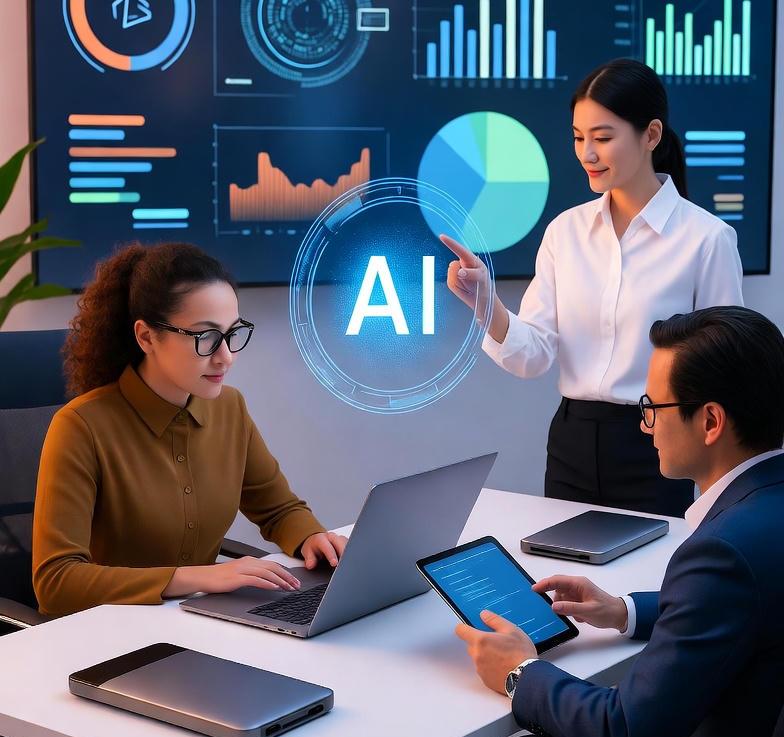
The world is changing at a breakneck pace, and artificial intelligence (AI) is at the forefront of this transformation. From healthcare to finance, manufacturing to retail, AI is reshaping industries, redefining how we work, and challenging long-standing assumptions about what’s possible. As we stand on the brink of this new era, one truth is crystal clear: technology alone isn’t enough to navigate the complexities of this revolution. To thrive in the age of AI, businesses must invest in their most valuable asset; their people. By prioritizing skills development, fostering innovation, and embracing diversity, organizations can build a workforce that’s ready to partner with AI and shape a future where humans and machines amplify each other’s strengths.
The Power of the Human-AI Partnership
Let’s get one thing straight: AI isn’t here to replace humans. It’s here to work alongside us, to enhance our capabilities, and to help us make better decisions. Think of AI as a collaborator; one that can process vast amounts of data, spot patterns we might miss, and handle repetitive tasks with unmatched efficiency. But for this partnership to truly shine, people need the right skills to engage with AI effectively.
This isn’t just about teaching employees how to use specific tools or platforms. It’s about fostering a deeper understanding of what AI can do and how it can be applied to solve real-world problems. That means investing in training programs that demystify AI, breaking it down into concepts that everyone; not just tech experts can grasp. Whether it’s a marketing team learning to leverage AI-driven analytics or a factory worker using AI-powered systems to optimize production, the goal is to empower people to work smarter, not harder.
But it’s not enough to offer a one-off workshop or a quick online course. The pace of AI’s evolution demands a culture of continuous learning. Companies need to create environments where employees are encouraged to adapt, experiment, and grow alongside the technology. This might mean setting up internal “AI academies,” offering regular training sessions, or providing access to online learning platforms tailored to different roles. By making learning a core part of the workplace, businesses can ensure their teams are ready to harness AI’s potential, no matter how quickly the technology evolves.
Upskilling and Reskilling: Preparing for a New Reality
The rise of AI isn’t just changing how we work instead it’s changing what we work on. Jobs that once revolved around routine, predictable tasks are increasingly being automated, while new roles are emerging that demand creativity, critical thinking, and emotional intelligence. This shift isn’t something to fear; it’s an opportunity to reimagine what work can be. But to seize that opportunity, businesses must prioritize upskilling and reskilling their workforce.
Upskilling is about helping employees build on their existing skills to take on more complex, AI-enabled tasks. For example, a data analyst might learn how to use AI tools to uncover deeper insights from customer data. Reskilling, on the other hand, involves preparing workers for entirely new roles. A warehouse employee, for instance, might train to become a robotics technician, overseeing the AI-powered systems that now handle inventory management.
These initiatives go beyond merely adopting new technology; they focus on keeping employees engaged and committed to their roles. When workers see their organization investing in their development, they are more likely to remain motivated and loyal. Moreover, a workforce proficient in both technical skills and human qualities such as problem-solving, teamwork, and creativity is better positioned to foster innovation and create value in an AI-powered world.
The challenge, of course, is making this happen at scale. Companies need to assess the skills gaps in their workforce, design targeted training programs, and measure the impact of those efforts over time. This might involve partnering with universities, tech providers, or online learning platforms to create customized curricula. It could also mean offering incentives, like bonuses or promotions, to encourage employees to take part. Whatever the approach, the key is to make upskilling and reskilling a priority, not an afterthought. In doing so, businesses can build a workforce that’s not just prepared for the future but excited to shape it.
Fostering a Culture of Innovation
AI thrives on innovation, but innovation does not come from machines alone; it comes from people. When employees feel empowered to think creatively, take risks, and experiment with new ideas, they are more likely to find ways to use AI in game-changing ways. That is why fostering a culture of innovation is just as important as teaching technical skills.
Creating this kind of culture starts with leadership. Managers need to set the tone by encouraging employees to share their ideas, no matter how big or small. This could mean setting up dedicated innovation labs where teams can test new AI applications or carving out time for employee-led projects that explore new ways to use technology. Cross-departmental collaboration is also key; when people from different backgrounds come together, they bring fresh perspectives that can spark breakthroughs.
Recognition plays a huge role here, too. When employees see their innovative ideas celebrated; whether through awards, bonuses, or simply public acknowledgment they are more likely to keep pushing the boundaries. Companies can also invest in tools and resources that make experimentation easier, like access to AI platforms, data sets, or prototyping software. The goal is to create an environment where people feel safe to take risks and confident that their contributions matter.
In a world where AI is constantly reshaping the competitive landscape, organizations that prioritize innovation will have a clear edge. They’ll be the ones developing new products, streamlining processes, and finding creative ways to meet customer needs. And at the heart of that innovation will be a workforce that’s empowered to think big and act boldly.
The Role of Diversity in AI Development
One of the biggest risks of AI is the potential for bias. If the people designing and deploying AI systems come from similar backgrounds, they’re more likely to overlook blind spots that can lead to unfair or ineffective solutions. That’s why diversity isn’t just a nice-to-have. It’s a must-have in the age of AI.
A diverse workforce brings a wealth of perspectives that can make AI systems more equitable and effective. For example, a team with varied cultural, gender, and socioeconomic backgrounds is more likely to spot potential biases in an AI algorithm, whether it is a facial recognition system that struggles with certain skin tones or a hiring tool that inadvertently favors one demographic over another. By including diverse voices in the development process, companies can create AI tools that better reflect the needs of their customers and society as a whole.
But diversity goes beyond just the tech teams. It’s about creating an inclusive culture across the entire organization—one where everyone feels valued and heard. This might mean implementing hiring practices that prioritize underrepresented groups, offering mentorship programs to support career growth, or creating employee resource groups that foster a sense of belonging. When people from all walks of life feel empowered to contribute, the result is not just better AI but better business outcomes overall.
Investing in diversity also sends a powerful message to customers. In an increasingly globalized world, people want to support companies that reflect their values and serve their communities. By building diverse teams and inclusive AI systems, businesses can create products and services that resonate with a broader audience, driving loyalty and growth.
A Vision for the Future
As AI continues to transform the world, the future of work will be defined by how well we prepare our people to embrace it. Technology is a powerful tool, but it is the human element, our creativity, our adaptability, our empathy, that will ultimately determine our success. By investing in skills development, fostering innovation, and prioritizing diversity, businesses can build a workforce that is ready to tackle the challenges and opportunities of the AI era.
This isn’t just a business strategy; it’s a vision for a better future. A future where humans and AI work hand in hand, amplifying each other’s strengths to solve problems, create opportunities, and build a world that’s more equitable and innovative than ever before. The road ahead may be uncertain, but with a commitment to our people, we can navigate it with confidence.
The choice is clear: invest in technology, yes, but invest in people first. Because in the age of AI, it’s our human capital. Our skills, our ideas, our diversity will light the way forward. Let’s embrace this moment, not as a challenge to overcome, but as an opportunity to redefine what’s possible. Together, we can create a future where AI doesn’t just change the world. It helps us make it better.
 Innovate with Ai