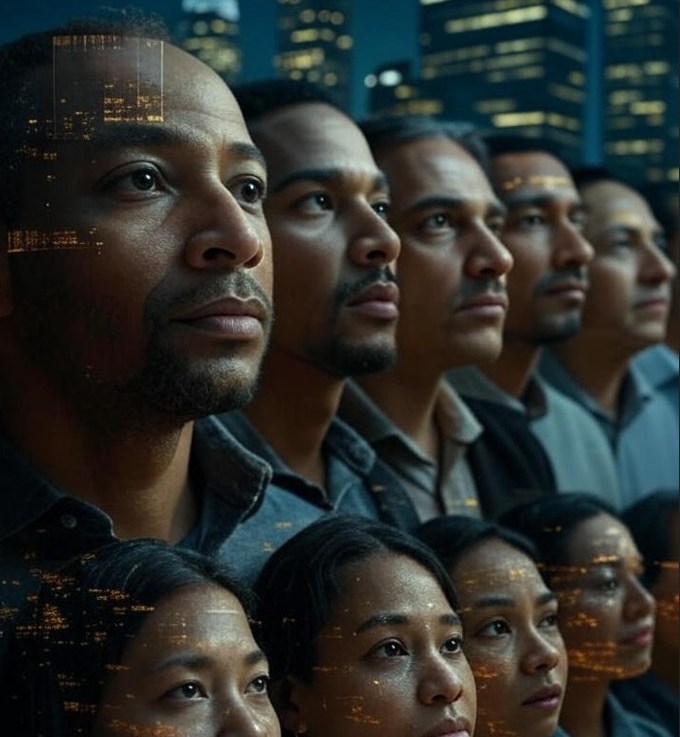
In today’s hyper-connected world, artificial intelligence (AI) is not just a tool; it’s a transformative force reshaping creativity, imagination, and our grasp on reality. Among AI’s most provocative innovations, deepfakes emerge as a double-edged sword: capable of unlocking unprecedented artistic possibilities while threatening the fabric of truth and trust. These hyper-realistic synthetic media, which manipulate videos, images, and audio to depict people saying or doing things they never did, have surged in sophistication. In 2025, projections estimate 8 million deepfakes shared online this year alone, many of them pornographic, underscoring the urgency to confront this technology. But where do we draw the line between groundbreaking artistry and dangerous deception? This question isn’t merely philosophical; it’s a societal imperative as deepfakes infiltrate entertainment, politics, and everyday life.
Deepfakes, a portmanteau of “deep learning” and “fake,” originated in the late 2010s, gaining notoriety through viral videos swapping celebrities’ faces onto unrelated bodies. The technology leverages generative adversarial networks (GANs), a type of machine learning where two neural networks compete—one generates content, the other critiques it—to produce eerily convincing forgeries. By 2025, advancements have made deepfakes better, faster, and cheaper, with hyper-realistic voice cloning catching up to video manipulation. Tools are now accessible via apps and online platforms, democratizing creation but amplifying risks. What began as a niche experiment has evolved into a global phenomenon, fueled by AI’s rapid progress. Yet, this evolution challenges our perceptions: If seeing is no longer believing, how do we navigate a world where reality is editable?
On the brighter side, deepfakes hold immense potential for creative expression, particularly in art and entertainment. In the film industry, they’ve become a staple for resurrecting historical figures or deceased actors, breathing new life into storytelling. For instance, Disney considered using AI deepfake technology to superimpose Dwayne Johnson’s face onto a body double for the live-action Moana remake, though data and copyright concerns halted the plan. This approach allows filmmakers to overcome logistical hurdles, such as aging actors or budget constraints, while preserving narrative authenticity. Beyond Hollywood, deepfakes break linguistic barriers; English soccer icon David Beckham used the technology in his Malaria No More campaign to deliver messages in multiple languages, making global advocacy more inclusive.
In the arts, deepfakes are redefining creativity by enhancing or reimagining masterpieces. Technologists have used deepfakes to alter the Mona Lisa’s expression or animate static portraits to “speak” historical quotes, offering immersive experiences in museums and galleries. Game development benefits too, with AI generating assets, voice acting, and even code, streamlining production and enabling indie creators to compete with big studios. Entertainment ventures like South Park have embraced deepfakes for satirical PSAs, including a striking video of a deepfake Donald Trump stripping naked to highlight misinformation, which Stephen Colbert praised as a “message of hope.” These applications showcase deepfakes as a canvas for innovation, blending technology with human ingenuity to push artistic boundaries. In journalism and education, they simulate historical events or revive figures like Albert Einstein for interactive lessons, making complex topics engaging and accessible.
Yet, the allure of creativity often masks the technology’s darker underbelly. The risks of deepfakes extend far beyond harmless fun, venturing into realms of harm, fraud, and societal disruption. Financially, deepfake fraud has skyrocketed; North America saw a 1,740% surge in cases between 2022 and 2023, with losses exceeding $200 million in the first quarter of 2025 alone. Scammers use voice cloning to impersonate executives or loved ones, tricking victims into wire transfers or data breaches. A Gartner survey reveals that 43% of cybersecurity leaders reported deepfake incidents in their organizations, highlighting the growing threat to businesses.
Politically, deepfakes can manipulate elections and incite conflict. Fabricated videos of leaders making inflammatory statements have swayed public opinion, as seen in recent global incidents. Socially, the misuse for non-consensual explicit content, often termed “deepfake porn,” is rampant, disproportionately victimizing women. In Italy, deepfakes of Prime Minister Giorgia Meloni and other female politicians appeared on pornographic sites, sparking outrage and underscoring how digital tools can humiliate and control. U.S. Senator Amy Klobuchar highlighted this when a deepfake AI op-ed, falsely attributed to her, discussed actress Sydney Sweeney’s jeans, illustrating how undetectable forgeries erode trust. Ethically, deepfakes raise profound concerns: they infringe on privacy, distort identities, and amplify biases inherent in training data. In courtrooms, they challenge the authenticity of evidence, potentially increasing litigation costs and eroding faith in justice systems. For aspiring content creators, the fear of deepfake exploitation deters digital participation, stifling free expression.
The ethical quagmire deepens when considering consent and truthfulness. Generative AI’s ability to fabricate realities blurs lines, leading to misuse in education (e.g., faked assignments) or marketing (synthetic endorsements damaging brands). Children are particularly vulnerable, with deepfakes enabling exploitation and misinformation that could harm developing minds. As detection models struggle to keep pace, despite a booming market projected to counter 9.9 billion attacks by 2027, the gap between creation and verification widens, fostering chaos.
To bridge this divide, robust legal frameworks and ethical guidelines are essential. Worldwide, regulations are evolving, though unevenly. In the U.S., the TAKE IT DOWN Act, signed into law, criminalizes non-consensual deepfake pornography and revenge content, empowering victims to seek removal within 48 hours. New York’s Hinchey law targets sexually explicit deepfakes, while Representative Alexandria Ocasio-Cortez reintroduced bills allowing lawsuits against creators. Globally, Denmark innovates by granting copyright over personal features, treating likeness as intellectual property. China’s rules mandate labeling AI-generated content, and the EU pushes for platforms to remove deepfakes swiftly, focusing on disinformation and fraud. Yet, challenges persist: borderless deepfakes demand harmonized international standards, as current laws often address specific harms like election interference rather than comprehensive oversight.
Balancing innovation with responsibility requires a multifaceted approach. Transparency is paramount; creators must disclose AI use, perhaps via watermarks or metadata, enabling audiences to discern fact from fiction. Education empowers the public: schools and media should teach digital literacy, highlighting deepfake detection cues like unnatural blinks or audio glitches. Creative industries can lead by adopting authenticity standards, such as ethical AI guidelines that prioritize consent and diversity in datasets to mitigate biases. Tech companies bear responsibility too; investing in advanced detection tools and collaborating with regulators can curb misuse without stifling artistry.
Looking ahead, 2025 trends signal escalation: AI-powered scams, polymorphic malware, and social engineering will intensify, with deepfakes weaponized in cyberattacks. However, positive evolutions loom. Ethical AI frameworks could harness deepfakes for therapeutic uses, like virtual therapy or cultural preservation. As humanoid robots and conscious-seeming AIs emerge, we’ll grapple with empathy toward synthetics, risking new vulnerabilities. The key is proactive dialogue: policymakers, artists, and citizens must collaborate to shape a future where technology amplifies humanity, not undermines it.
In conclusion, deepfakes epitomize AI’s pivotal role in our creative and ethical landscape. The thin line between artistry and deception demands vigilance, integrity, and foresight. By establishing clear guidelines, fostering transparency, and educating generations, we can steer this technology toward inspiration rather than chaos. The future of deepfakes and AI at large is ours to mold; let’s ensure it’s built on trust and truth.
 Innovate with Ai