Tag: technology

The Creative Shift: What It’s Like Making Visuals with AI Today

The Creative Shift: What It’s Like Making Visuals with AI Today

In the last few years, artificial intelligence has quietly moved from the background of technology into the center of the creative process. What started as tools for data analysis and automation has evolved into something far more personal and expressive. Today, AI is helping artists, designers, marketers, and everyday creators bring visual ideas to life in ways that were simply not possible before.

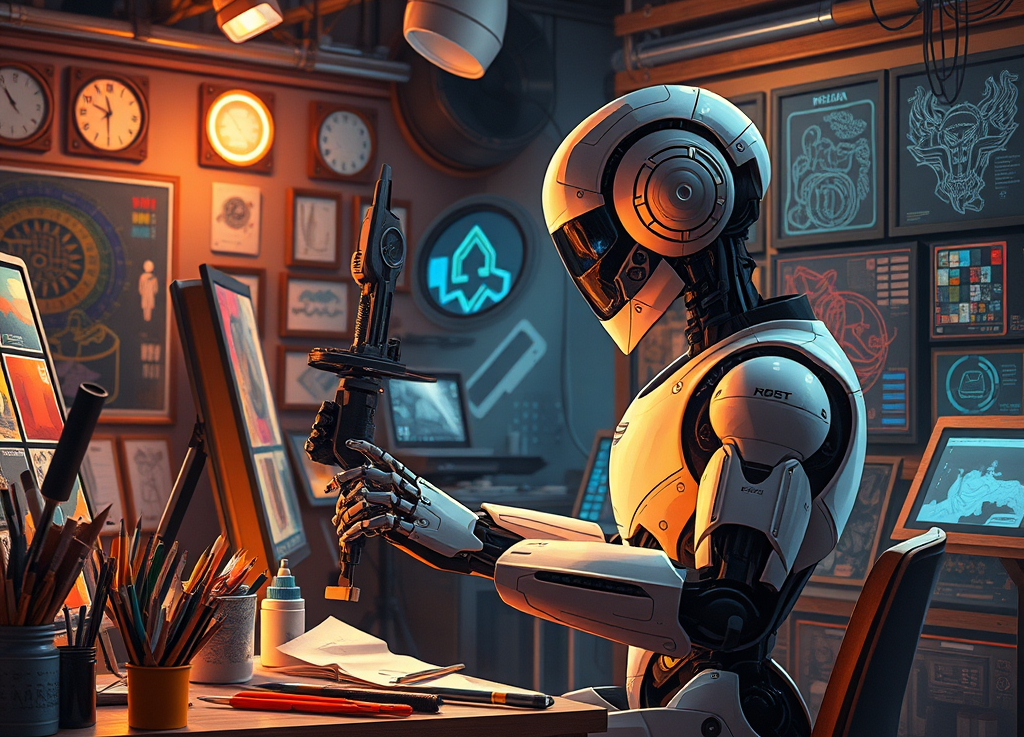
I have seen this shift firsthand. As someone who actively builds and experiments with custom GPTs, I have created tools like an image creation agent and a sketch interpreter to support my own creative workflows. These systems are not about replacing creativity. They are about extending it, speeding up the rough drafts, and helping ideas take shape when words or sketches alone are not enough.


AI image and video generation sit at the heart of this creative transformation. They blend technical innovation with human imagination, reshaping how we think about art, design, and visual storytelling.

The Core Techniques Behind AI Image and Video Generation
To understand why AI-generated visuals have improved so rapidly, it helps to look at the techniques behind them. While the math and code can get complex, the core ideas are surprisingly intuitive.


Generative Adversarial Networks, commonly known as GANs, were a major breakthrough in visual AI. The concept is based on competition. One neural network, called the generator, creates images. Another, called the discriminator, judges whether those images look real or fake.

Over time, the generator learns from its mistakes. Each iteration produces better results until the images become difficult to distinguish from real photographs or artwork. This technique has been used to create digital art, enhance old photos, design fictional characters, and even simulate realistic environments for games and films.

What makes GANs especially interesting from a human perspective is how they mimic creative feedback. The generator improves not because it knows what beauty is, but because it is constantly being challenged and corrected. In many ways, it reflects how artists grow through critique and iteration.


Convolutional Neural Networks, or CNNs, are another foundational technology behind AI visuals. Unlike GANs, CNNs focus on understanding images rather than inventing them from scratch.

CNNs analyze visual data by recognizing patterns such as edges, textures, shapes, and motion. This makes them essential for tasks like image recognition, video frame analysis, style transfer, and video enhancement. In video generation, CNNs help models understand how frames relate to each other, allowing for smoother motion and more coherent sequences.

When combined with generative techniques, CNNs allow AI to not only create images but also understand context, structure, and visual consistency.


One reason AI image and video generation has spread so quickly is accessibility. What once required deep technical expertise is now available through user-friendly platforms that encourage experimentation.


One of the most well-known tools in this space is DALL·E, developed by OpenAI. It allows users to generate images simply by describing them in text. This removes a major barrier to visual creation. You no longer need advanced drawing skills or expensive software to explore visual ideas.

For creators like me, tools like DALL·E become brainstorming partners. They help visualize concepts early, spark new directions, and sometimes produce unexpected results that inspire better ideas.


Artbreeder focuses on image blending and evolution. Users can mix portraits, landscapes, and abstract art, adjusting sliders to explore variations. It feels less like issuing commands and more like collaborating with a living system.

This kind of tool highlights an important point. AI creativity is often at its best when it invites human guidance rather than replacing it.


Runway ML has become a favorite among video creators. It offers real-time video editing, background removal, motion tracking, and generative effects powered by machine learning. For filmmakers and content creators, it shortens production cycles and opens doors to techniques that once required entire teams.


DeepArt specializes in style transfer, allowing users to apply artistic styles inspired by famous painters to their own photos. While style transfer is not new, tools like this made it mainstream and approachable, helping people see their everyday images in a new light.


Despite the technical foundations, the most important element in AI-generated visuals is still human intention. AI does not wake up with an idea. It does not feel curiosity or emotion. Those come from the person guiding it.

When I built my custom GPTs, including an image creation agent and a sketch interpreter, my goal was simple. I wanted tools that could meet me halfway. The image creation agent helps translate abstract ideas into visuals quickly, while the sketch interpreter turns rough drawings into more refined concepts. Neither replaces my creative judgment. They simply accelerate the early stages of the process. This human in the loop approach is where AI shines. It removes friction while preserving authorship. AI image and video generation is already reshaping multiple industries, often in subtle but powerful ways.


Marketing teams use AI-generated visuals to prototype campaigns, test concepts, and personalize content at scale. Instead of relying solely on stock photos, brands can generate visuals tailored to specific audiences, moods, and messages. This reduces costs and increases creative flexibility.


In film, television, and gaming, AI assists with concept art, environment design, and even character animation. It speeds up pre-production and allows creative teams to explore more ideas before committing resources. In games, AI-generated assets help small studios compete with larger ones.


AI-generated visuals are especially valuable in education. Complex topics become easier to understand when supported by clear images and animations. From medical diagrams to historical reconstructions, AI helps educators create engaging materials without specialized design skills.


Designers use AI to explore patterns, textures, and forms that would take weeks to prototype manually. AI-generated concepts act as creative prompts rather than finished products, helping designers push boundaries while staying in control of the final outcome.


With new power comes new responsibility.
AI-generated visuals raise important questions about authorship, originality, and misuse. Deepfakes, misinformation, and copyright concerns are real issues that deserve attention.
The solution is not to reject the technology but to use it thoughtfully. Transparency, ethical guidelines, and respect for original creators must be part of the conversation. As creators, we set the tone for how these tools are used.


The future of AI image and video generation is not about machines replacing artists. It is about collaboration becoming more fluid. We will see tools that understand context better, respond more naturally to creative feedback, and integrate seamlessly into existing workflows.

Custom systems like the GPTs I build today are just the beginning. As models become more adaptable, creators will shape AI tools to fit their personal styles rather than adjusting their styles to fit the tools.


AI image and video generation represent one of the most exciting intersections of technology and creativity in our time. These tools are not magic, and they are not shortcuts to meaningful work. They are amplifiers. They amplify imagination, speed, and experimentation when guided by human vision. By embracing AI as a creative partner, not a replacement, we unlock new ways to tell stories, share ideas, and explore visual worlds. The future of visual creation is not automated. It is collaborative, expressive, and deeply human.

Creativity in the Age of AI

Creativity in the Age of AI


Technology is moving fast, and creativity isn’t lagging behind. Machine learning and artificial intelligence are popping up everywhere; showing up in studios, writer’s rooms, design labs. They aren’t just speeding things up; they’re actually making stuff. AI can write a song, spit out artwork from a few words, or whip up poetry in the voice of your favorite author. Ten years ago, nobody would’ve believed it. Now it’s just part of the landscape.

But big shifts always stir up big questions. There are plenty of artists worrying that they’re losing something. Can a machine ever nail the feeling of a sticky summer as a kid or the ache of heartbreak? There’s this nagging fear that art will get too smooth, too flawless. And, honestly, perfection isn’t what people connect with. It’s the rough edges that draw us in.

There are real-world worries, too. Jobs in illustration, writing, music and they’re all changing as AI steps in to do things that once took years to master. Underneath that anxiety is a bigger question: If machines can copy creativity this well, what does that say about us? Are humans just a bunch of patterns to crack, or is there something that sets us apart?

Not everyone’s spooked. Lots of creatives actually welcome AI as a partner. Imagine a tool that spits out a pile of logo ideas in seconds, drafts the bones of a script, or suggests a new chord when you’re stuck. That’s not replacement, it’s backup. In music, producers mix AI-made loops with live jams. In film, composers use AI to cook up sounds they’d never get to on their own. The results? Weird, new, and sometimes just plain cool.

This tug-of-war—fear on one side and excitement on the other, nothing new. When photography showed up in the 1800s, painters freaked out, sure their days were numbered. But all it did was free them to get wild. Can you say “Impressionism and Cubism.” AI could be that kind of spark now.

The trick is finding middle ground. AI’s a tool. It’s not the artist. Writers can use it to rough out a story, then dive in and make it real. Designers get to prototype fast, then shape things their own way. The canvas just gets bigger.

Still, it’s not all smooth sailing. There are thorny questions about ownership and copyright. If AI gets trained on thousands of artworks without anyone’s okay, who owns what it makes? And bias is a thing—most models lean Western, male, English-speaking. Without more voices in the mix, even “diverse” art risks coming out samey.

There’s hope, though. Writers who try AI in workshops start out wary, end up wowed. The AI brings structure, people bring the spark, humor, subtlety, feeling. One writer said it’s like jamming with a bandmate who never gets tired. That’s the kind of teamwork that opens doors.

Education is going to matter quite a bit. Art schools may start teaching how to work with AI; specifically how to prompt it, critique what it spits out, and decide when to follow it or toss its ideas. Online, people are already swapping tips, breaking writer’s block, making trippy landscapes with a few clicks.

Different fields are carving their own paths. Marketers use AI to sketch out campaigns in record time. Game designers are building worlds swarming with lifelike characters. Meanwhile, fine art and literature still lean into the human side. Creativity is never one-size-fits-all.

Looking ahead, the possibilities are huge. Art that changes with your heartbeat. Stories that shift with your mood. Music that grows and bends with the crowd’s vibe. This stuff isn’t sci-fi anymore—it’s on the horizon.

The future of creativity isn’t about machines taking over. It’s about curiosity, guts, and working together. AI stretches what we can imagine, but we’re the ones steering the ship. If we keep poking at the edges, messing around, and asking questions, we’ll make more art not less. Art that’s weirder, richer, and full of surprises.

That’s something worth getting excited about.
AI in Art: Balancing Innovation and Humanity

AI in Art: Balancing Innovation and Humanity

I’ve been thinking a lot lately about how artificial intelligence is showing up in creative spaces. Not just helping behind the scenes, but actually making stuff. Writing, drawing, composing music. And yeah, sometimes the results are surprisingly good.

You can type in a few words, and boom, you’ve got a song, an illustration, or a story draft. It’s impressive. But I also get why some folks are uneasy about this. Especially people who’ve spent years learning their craft. There’s a tension between excitement and concern that keeps coming up.

What We Might Be Losing

For a lot of people, creativity isn’t just about making something that looks or sounds good. It’s about the story behind it. The lived experience. That rough edge that makes something feel human. Like when a smell brings back a memory, or when a song hits you right in the chest because it came from a real place.

That’s the part we don’t want to lose. It’s not just about protecting jobs, though that’s a big part of it. It’s also about wondering what it means if a machine can do what we do. Does it mean our work wasn’t as special as we thought?

I’ve talked to illustrators, copywriters, musicians—all of them asking the same question in different words: “If AI can mimic the look, the sound, the feel of what I do, then what’s left for me?” That question isn’t easy to answer.

There’s something uniquely messy in art. The imperfect cadence of a guitar riff, the slight misstep in a drawing, the handwritten note that’s slightly off-center. Those little “flaws” often carry meaning. They hint at a human being behind the work. When everything becomes too perfect, something gets lost.

I don’t mean to glamorize struggle for struggle’s sake. I’ve spent years pushing through projects, pivoting from nursing assistant to aeromedical technician to IT product analyst. I know what “getting after it” means. But part of that process is the reflection, the pause, the mistake and it feeds into creativity. When you remove that, you risk art that feels hollow.

What We Might Be Gaining

On the flip side, I’ve also seen how AI can really help. It can take care of the repetitive parts, draft ideas faster, and suggest directions when you’re stuck. It’s like having a super-fast assistant who’s always ready to jump in.

Imagine you’re a designer trying to generate logos for a client. You might hand-sketch a few, then refine one or two before showing. With AI you could generate fifty variations in seconds, then pick two, refine those, and move ahead. That doesn’t replace your creative vision. It just gives you more breadth to work from.

Or imagine you’re a writer and you hit the dreaded blank page. You open an AI tool and ask: “Give me five inciting incidents for a sci-fi story.” You pick one, feel the spark, then shape it. The tool didn’t write the final story, but it helped you through the block.

In music, producers are blending AI-generated loops with live instrumentation. The result: something that feels both futuristic and deeply human. It’s not “machine music” in the cold sense, it’s a hybrid. And that hybrid is interesting because it takes something familiar and skews it just enough.

The wider the toolkit, the more options. That’s what I find exciting. If you’re open to it, you might find you can go places you never planned to go.

The Middle Ground: Humans + AI

Personally, this is where I land. It’s not about choosing one side. It’s not about either AI or human creativity. It’s about how they can work together. A tool is just a tool. It’s how you use it that makes the difference.

Think of it like the camera in the 19th century. When photography came along, painters freaked out. “This will kill art!” they said. But it didn’t. It evolved. Painters didn’t have to chase realism anymore. They explored emotions, light, abstraction, and new movements like Impressionism followed. Maybe AI is that kind of shift.

When you use AI as a brush, not the painter, you expand what you can do. You don’t hand over your role, you amplify it. You still make the meaningful choices. You still bring the lived experience. The machine just helps you hack through parts of the process so you can focus on what you’re uniquely good at.

The Big Questions We’re Still Sorting Out

Of course there are some things we haven’t figured out yet. Let’s dig into a few.

Who Owns the Work?

When an AI model generates output that mimics thousands of artists’ works (sometimes without explicit permission), what does authorship mean? If you ask a model to produce something “in the style of” a well-known creator, is it derivative? Are you building on their legacy or riding it? The laws are playing catch-up.

What About Bias and Homogeneity?

A lot of AI tools are trained on data that mostly reflects Western, male, English-speaking voices. If you build creative output from that base, you risk a flood of work that looks diverse but feels the same. That’s a less obvious problem, but a real one. If we’re not careful we’ll replace variety with algorithmic “variety” that doesn’t hit as hard.

What Gets Replaced and What Doesn’t?

Some jobs may change. Some may disappear. But I don’t think it’s an apocalypse. I think it’s transformation. The people who thrive will be those who can ask: “Where can I let the machine help? Where do I need to take over?” The answer will vary by craft, by person, by context.

What Gives Me Hope

I’ve heard about writers who join workshops where they co-author short stories with AI. At first everyone is hesitant. The outputs feel weird. They poke at them like they’re a strange new ingredient in the kitchen. But by the end something surprising happens.

The AI lays down structure and dialogue like a skeleton. The humans layer in the flesh, the humor, the metaphor, the heart. One writer told me it felt like jamming with a tireless bandmate who never argues about tempo.

That’s the future I want to believe in. Not AI versus humans. AI and humans. A real partnership. And if we focus on that, the results could be more interesting than anything we’ve done yet.

Where We Go From Here

So if that’s the kind of future I hope for, what do we do now? A few ideas:

Teach the Thinking and the Tool

Art schools and creative programs should cover not just tools like Photoshop or Pro Tools, but how to think with AI. That means: how to write good prompts, how to critique machine output, how to know when to step in and when to step back.

Build Communities, Not Just Products

Online communities, Slack groups, forums—these are already buzzing with people leaning into AI prompts and sharing hacks. That kind of peer-to-peer learning is gold. When someone says, “Here’s how I used it to break writer’s block,” you learn faster than by any solo experiment.

Keep the Human Element in the Driver’s Seat

Even as the tools scale, I believe the human touch matters. In commercial fields, maybe deadlines shrink and volume rises. But in fine art, literature, deep music work, the human will still lead. And that’s okay. Not everyone has to use AI the same way.

Embrace the Possibility

We’re still early in this whole thing. But imagine where it might go:

Art that responds to your mood

Music that shifts based on what the crowd is feeling

Stories that adapt in real time as you read

These aren’t just sci-fi fantasies. They’re in reach, if we build them thoughtfully.

TL;DR

Creativity is shifting thanks to AI, but the human part still matters

We might lose some of the lived-experience edge, but we gain new tools and speed

The sweet spot is humans and machines working together

Big questions remain—ethics, bias, ownership—and we shouldn’t avoid them

Education, communities, and curiosity will shape where this all goes

CTA

If you’re working in creative tech, thinking about how AI fits into your workflow, or just curious about where this goes next, I’d love to have you join the conversation. Subscribe to my newsletter to get updates on how I’m exploring this intersection of human creativity and AI tools (and how you can too).

Let’s keep experimenting, learning, and building something new together.

The AI Crossroads in Education: Tutor or Shortcut? Lessons from the Dot-Com Bubble

The AI Crossroads in Education: Tutor or Shortcut? Lessons from the Dot-Com Bubble

In today’s rapidly evolving technological landscape, artificial intelligence (AI) has woven itself into various aspects of our lives, and education is certainly no exception. AI tools are quickly becoming commonplace in classrooms, lecture halls, and homes, offering students personalized learning experiences, immediate feedback, and seemingly limitless resources to aid their studies. As educators, parents, and institutions rapidly embrace these innovations—often with the urgency of a gold rush—a fundamental and lingering question remains: is AI truly poised to be the helpful, tireless tutor we’ve always dreamed of, or are we merely paving the way for a dangerous, skill-eroding shortcut?

The initial impulse is to celebrate the advancements. Proponents of AI in education argue persuasively that these tools represent an unprecedented enhancement of the learning process. We are moving beyond static textbooks and standardized tests toward dynamic, adaptive systems. Applications range from intelligent tutoring platforms that adjust complexity in real-time, to sophisticated AI-powered homework assistants that can articulate concepts in multiple ways, depending on a student’s input. Platforms, including major players and agile startups, have integrated AI to track student progress at a granular level, instantly identifying knowledge gaps and suggesting customized exercises to bolster understanding. This ability to access tailored information anytime and anywhere means that learners can engage with material outside traditional classroom settings, effectively democratizing access to high-quality instruction.

Moreover, the benefits extend beyond the student. AI can profoundly aid educators by automating the crushing weight of administrative tasks. Imagine an English teacher freed from grading 150 non-critical short answer quizzes, or a math professor relieved of manual data management. When AI handles these rote, time-consuming processes, teachers can devote dramatically more time to enriching their lessons, facilitating deeper discussions, and—most crucially—engaging directly with students who need personalized human intervention. The promise is not replacing the teacher, but augmenting their capabilities, allowing them to focus on what truly matters: fostering critical thinking, emotional intelligence, and a stimulating, human-centered learning environment.

The Rising Tide of Dependency and Critical Skill Erosion

Despite the utopian vision, the rising reliance on AI raises a thicket of concerns that cannot be dismissed as mere technological skepticism. One major worry revolves around the potential for students to become overly dependent on these technologies, sacrificing the very critical thinking and problem-solving skills the educational system is designed to impart.

When instant access to information—or, more accurately, instant access to a near-perfectly formulated answer—becomes the norm, it can lead to a culture of shortcuts. Students, facing the pressures of time, demanding curricula, and performance expectations, may choose convenience over genuine, struggle-earned understanding. The hard work of wrestling with a complex problem, synthesizing disparate sources, and drafting multiple versions of an argument—the processes that build intellectual muscle—are easily bypassed. This tendency is particularly evident in high-stakes testing environments, where the pressure to succeed could encourage the covert or inappropriate use of AI tools simply to meet a metric, rather than mastering a skill.

Furthermore, the duality of AI’s advantages and pitfalls invites ethical questions regarding data privacy and accuracy. Schools and universities must grapple with the implications of using algorithms that learn from immense volumes of student data. Are students’ learning profiles and personal information being adequately protected? How are these systems regulated? Beyond privacy, there is the problem of accountability. How accountable are AI systems for promoting biases, accidentally echoing misinformation, or generating factual errors in their responses? The “black box” nature of some deep learning models makes it difficult to audit and correct these systemic flaws, leaving educators and students reliant on a tool they cannot fully understand or verify.

An Echo from the Past: The Dot-Com Bubble of 2000

To truly grasp the current moment, it is necessary to look back at a similar period of technological euphoria: the dot-com era of the late 1990s. The parallels are not exact, but they offer crucial lessons about investment, hype, and the difference between genuine revolution and speculative fever. 

In the late 90s, the emergence of the World Wide Web created a climate of boundless optimism. Companies—many with no revenue, shaky business plans, and names ending in .com—were achieving billion-dollar valuations based purely on “potential” and “disruption.” The mantra was simple: get big fast. Traditional metrics like profitability, sustainable business models, or even a tangible product were often discarded in favor of aggressive customer acquisition and market share dominance. There was a pervasive, almost religious belief that the internet would change everything, and that any business not on board would be doomed.

This environment created a widespread fear of missing out (FOMO), not just among individual investors, but also among legacy institutions. Libraries, schools, and corporations felt compelled to adopt the latest internet technologies, often without rigorous evaluation of their true utility or long-term viability. They invested heavily in bandwidth, new software, and training, frequently chasing a promised efficiency or transformation that never fully materialized before the bubble burst.

The spectacular crash that began in 2000 taught us a painful, yet invaluable, lesson: hype precedes utility, and potential is not profit. Many of the pioneering companies failed, but the underlying technology—the internet itself—not only survived but flourished, giving rise to the sustainable giants we know today. The lesson was not that technology was worthless, but that the speed and frenzy of adoption, driven by speculation rather than substance, was unsustainable and ultimately damaging to the institutions that bought into the hype.

Comparing AI and the Dot-Com Fever in Education

When we overlay the current AI surge onto the dot-com narrative, both comparisons and contrasts emerge, offering a clearer perspective on the dangers ahead.

The Contrast: Immediate Utility

The most significant contrast lies in the nature of the product. Many dot-com startups offered abstract ideas or services that required significant user habit change (e.g., ordering groceries online in 1999). In contrast, modern AI tools, particularly Large Language Models (LLMs), offer immediate, tangible utility. A student can use an AI to draft a summary, debug code, or solve a math problem right now. This immediate gratification and functional effectiveness make AI adoption far faster and more entrenched than early internet technologies. The utility is real, which makes the ethical and pedagogical challenge even more complex—we are not dealing with vaporware, but with a highly effective, though potentially skill-compromising, assistant.

The Comparison: Hype, FOMO, and the Search for Substance

However, the similarities in the cultural and investment context are striking.

  1. Investment Frenzy and Over-Promise: Just as in the dot-com era, there is a massive investment frenzy in EdTech AI. Companies promise radical disruption—the term used almost universally in the late 90s—and institutions feel intense pressure to be at the “cutting edge.” This drives schools to purchase and implement AI platforms before proper pedagogical research has been conducted, effectively treating students as beta-testers for unproven long-term learning methodologies.
  2. Focus on Speed Over Substance: The dot-com crash occurred because companies prioritized “eyeballs” and “market share” over profitability. Today, the focus in AI education can sometimes prioritize speed and convenienceover deep learning outcomes. If an AI can give a student an A-grade essay in five minutes, the immediate metric (the grade) looks good, but the actual educational substance—the skill of constructing that argument—is lost. The system becomes optimized for the shortcut, not for the intellectual struggle that defines real learning.
  3. The “Universal Solution” Fallacy: Dot-com companies often claimed they could solve every business problem. Today, we see similar rhetoric suggesting AI can solve educational inequality, teacher burnout, and declining test scores simultaneously. History reminds us that no single technology is a universal panacea. Relying on AI to paper over foundational issues like funding, curriculum design, or class size is a speculative gamble that distracts from core problems, much like how the internet was touted as the solution to every business inefficiency in the late 90s.

Establishing Guardrails: The Path Forward

The path forward requires a level-headedness that was often absent during the dot-com boom. We must acknowledge that AI is not going away, nor should it. It is a powerful tool. The challenge is establishing the necessary educational and ethical guardrails to ensure its constructive use.

This means shifting the pedagogical focus. Instead of asking students to produce work that can be easily generated by AI, educators must reorient assignments toward metacognition—the ability to think about one’s own thinking. Students need to be taught how to critically prompt AI, synthesize its output, identify its biases and flaws, and ultimately use it as a powerful research assistant, not a ghostwriter. The skill is moving from being a producer of content to becoming a highly effective editor, validator, and synthesizer of information.

Furthermore, parents, policymakers, and educators need to establish clear, robust guidelines regarding data privacy and the responsible implementation of these tools. We must demand transparency from EdTech vendors about how their algorithms work and how student data is protected, ensuring that the technology serves the learning mission, and not the other way around.

Conclusion

AI stands at a definitive crossroads in education. It possesses the immense potential to serve as a powerful, hyper-personalized tutor, democratizing access and alleviating teacher burden. Yet, if misused—or, more accurately, if adopted blindly under the influence of tech-driven hype—it risks becoming a dangerous shortcut that erodes the foundational critical thinking skills essential for future success.

The memory of the dot-com boom should serve as a vital warning: the loudest voices and the fastest growth are not always indicators of sustainable value. We must embrace AI, but with a critical eye, ensuring that every technological investment is measured not by its capacity for disruption, but by its proven ability to foster deeper, more rigorous, and ultimately more human learning. It is our responsibility to guide this powerful technology toward its role as a supportive co-pilot, rather than allowing it to become the unexamined destination. This approach requires awareness, intentionality, and a renewed focus on the timeless value of intellectual effort.

Investing in People: The Heart of Success in the AI Era

Investing in People: The Heart of Success in the AI Era

The world is changing at a breakneck pace, and artificial intelligence (AI) is at the forefront of this transformation. From healthcare to finance, manufacturing to retail, AI is reshaping industries, redefining how we work, and challenging long-standing assumptions about what’s possible. As we stand on the brink of this new era, one truth is crystal clear: technology alone isn’t enough to navigate the complexities of this revolution. To thrive in the age of AI, businesses must invest in their most valuable asset; their people. By prioritizing skills development, fostering innovation, and embracing diversity, organizations can build a workforce that’s ready to partner with AI and shape a future where humans and machines amplify each other’s strengths.

The Power of the Human-AI Partnership
Let’s get one thing straight: AI isn’t here to replace humans. It’s here to work alongside us, to enhance our capabilities, and to help us make better decisions. Think of AI as a collaborator; one that can process vast amounts of data, spot patterns we might miss, and handle repetitive tasks with unmatched efficiency. But for this partnership to truly shine, people need the right skills to engage with AI effectively.

This isn’t just about teaching employees how to use specific tools or platforms. It’s about fostering a deeper understanding of what AI can do and how it can be applied to solve real-world problems. That means investing in training programs that demystify AI, breaking it down into concepts that everyone; not just tech experts can grasp. Whether it’s a marketing team learning to leverage AI-driven analytics or a factory worker using AI-powered systems to optimize production, the goal is to empower people to work smarter, not harder.

But it’s not enough to offer a one-off workshop or a quick online course. The pace of AI’s evolution demands a culture of continuous learning. Companies need to create environments where employees are encouraged to adapt, experiment, and grow alongside the technology. This might mean setting up internal “AI academies,” offering regular training sessions, or providing access to online learning platforms tailored to different roles. By making learning a core part of the workplace, businesses can ensure their teams are ready to harness AI’s potential, no matter how quickly the technology evolves.

Upskilling and Reskilling: Preparing for a New Reality
The rise of AI isn’t just changing how we work instead it’s changing what we work on. Jobs that once revolved around routine, predictable tasks are increasingly being automated, while new roles are emerging that demand creativity, critical thinking, and emotional intelligence. This shift isn’t something to fear; it’s an opportunity to reimagine what work can be. But to seize that opportunity, businesses must prioritize upskilling and reskilling their workforce.

Upskilling is about helping employees build on their existing skills to take on more complex, AI-enabled tasks. For example, a data analyst might learn how to use AI tools to uncover deeper insights from customer data. Reskilling, on the other hand, involves preparing workers for entirely new roles. A warehouse employee, for instance, might train to become a robotics technician, overseeing the AI-powered systems that now handle inventory management.

These initiatives go beyond merely adopting new technology; they focus on keeping employees engaged and committed to their roles. When workers see their organization investing in their development, they are more likely to remain motivated and loyal. Moreover, a workforce proficient in both technical skills and human qualities such as problem-solving, teamwork, and creativity is better positioned to foster innovation and create value in an AI-powered world.

The challenge, of course, is making this happen at scale. Companies need to assess the skills gaps in their workforce, design targeted training programs, and measure the impact of those efforts over time. This might involve partnering with universities, tech providers, or online learning platforms to create customized curricula. It could also mean offering incentives, like bonuses or promotions, to encourage employees to take part. Whatever the approach, the key is to make upskilling and reskilling a priority, not an afterthought. In doing so, businesses can build a workforce that’s not just prepared for the future but excited to shape it.

Fostering a Culture of Innovation
AI thrives on innovation, but innovation does not come from machines alone; it comes from people. When employees feel empowered to think creatively, take risks, and experiment with new ideas, they are more likely to find ways to use AI in game-changing ways. That is why fostering a culture of innovation is just as important as teaching technical skills.

Creating this kind of culture starts with leadership. Managers need to set the tone by encouraging employees to share their ideas, no matter how big or small. This could mean setting up dedicated innovation labs where teams can test new AI applications or carving out time for employee-led projects that explore new ways to use technology. Cross-departmental collaboration is also key; when people from different backgrounds come together, they bring fresh perspectives that can spark breakthroughs.

Recognition plays a huge role here, too. When employees see their innovative ideas celebrated; whether through awards, bonuses, or simply public acknowledgment they are more likely to keep pushing the boundaries. Companies can also invest in tools and resources that make experimentation easier, like access to AI platforms, data sets, or prototyping software. The goal is to create an environment where people feel safe to take risks and confident that their contributions matter.

In a world where AI is constantly reshaping the competitive landscape, organizations that prioritize innovation will have a clear edge. They’ll be the ones developing new products, streamlining processes, and finding creative ways to meet customer needs. And at the heart of that innovation will be a workforce that’s empowered to think big and act boldly.

The Role of Diversity in AI Development
One of the biggest risks of AI is the potential for bias. If the people designing and deploying AI systems come from similar backgrounds, they’re more likely to overlook blind spots that can lead to unfair or ineffective solutions. That’s why diversity isn’t just a nice-to-have. It’s a must-have in the age of AI.

A diverse workforce brings a wealth of perspectives that can make AI systems more equitable and effective. For example, a team with varied cultural, gender, and socioeconomic backgrounds is more likely to spot potential biases in an AI algorithm, whether it is a facial recognition system that struggles with certain skin tones or a hiring tool that inadvertently favors one demographic over another. By including diverse voices in the development process, companies can create AI tools that better reflect the needs of their customers and society as a whole.

But diversity goes beyond just the tech teams. It’s about creating an inclusive culture across the entire organization—one where everyone feels valued and heard. This might mean implementing hiring practices that prioritize underrepresented groups, offering mentorship programs to support career growth, or creating employee resource groups that foster a sense of belonging. When people from all walks of life feel empowered to contribute, the result is not just better AI but better business outcomes overall.

Investing in diversity also sends a powerful message to customers. In an increasingly globalized world, people want to support companies that reflect their values and serve their communities. By building diverse teams and inclusive AI systems, businesses can create products and services that resonate with a broader audience, driving loyalty and growth.

A Vision for the Future
As AI continues to transform the world, the future of work will be defined by how well we prepare our people to embrace it. Technology is a powerful tool, but it is the human element, our creativity, our adaptability, our empathy, that will ultimately determine our success. By investing in skills development, fostering innovation, and prioritizing diversity, businesses can build a workforce that is ready to tackle the challenges and opportunities of the AI era.

This isn’t just a business strategy; it’s a vision for a better future. A future where humans and AI work hand in hand, amplifying each other’s strengths to solve problems, create opportunities, and build a world that’s more equitable and innovative than ever before. The road ahead may be uncertain, but with a commitment to our people, we can navigate it with confidence.

The choice is clear: invest in technology, yes, but invest in people first. Because in the age of AI, it’s our human capital. Our skills, our ideas, our diversity will light the way forward. Let’s embrace this moment, not as a challenge to overcome, but as an opportunity to redefine what’s possible. Together, we can create a future where AI doesn’t just change the world. It helps us make it better.

Navigating the Deepfake Frontier: Creativity, Deception, and the Quest for Ethical Boundaries

Navigating the Deepfake Frontier: Creativity, Deception, and the Quest for Ethical Boundaries

In today’s hyper-connected world, artificial intelligence (AI) is not just a tool; it’s a transformative force reshaping creativity, imagination, and our grasp on reality. Among AI’s most provocative innovations, deepfakes emerge as a double-edged sword: capable of unlocking unprecedented artistic possibilities while threatening the fabric of truth and trust. These hyper-realistic synthetic media, which manipulate videos, images, and audio to depict people saying or doing things they never did, have surged in sophistication. In 2025, projections estimate 8 million deepfakes shared online this year alone, many of them pornographic, underscoring the urgency to confront this technology. But where do we draw the line between groundbreaking artistry and dangerous deception? This question isn’t merely philosophical; it’s a societal imperative as deepfakes infiltrate entertainment, politics, and everyday life.

Deepfakes, a portmanteau of “deep learning” and “fake,” originated in the late 2010s, gaining notoriety through viral videos swapping celebrities’ faces onto unrelated bodies. The technology leverages generative adversarial networks (GANs), a type of machine learning where two neural networks compete—one generates content, the other critiques it—to produce eerily convincing forgeries. By 2025, advancements have made deepfakes better, faster, and cheaper, with hyper-realistic voice cloning catching up to video manipulation. Tools are now accessible via apps and online platforms, democratizing creation but amplifying risks. What began as a niche experiment has evolved into a global phenomenon, fueled by AI’s rapid progress. Yet, this evolution challenges our perceptions: If seeing is no longer believing, how do we navigate a world where reality is editable?

On the brighter side, deepfakes hold immense potential for creative expression, particularly in art and entertainment. In the film industry, they’ve become a staple for resurrecting historical figures or deceased actors, breathing new life into storytelling. For instance, Disney considered using AI deepfake technology to superimpose Dwayne Johnson’s face onto a body double for the live-action Moana remake, though data and copyright concerns halted the plan. This approach allows filmmakers to overcome logistical hurdles, such as aging actors or budget constraints, while preserving narrative authenticity. Beyond Hollywood, deepfakes break linguistic barriers; English soccer icon David Beckham used the technology in his Malaria No More campaign to deliver messages in multiple languages, making global advocacy more inclusive.

In the arts, deepfakes are redefining creativity by enhancing or reimagining masterpieces. Technologists have used deepfakes to alter the Mona Lisa’s expression or animate static portraits to “speak” historical quotes, offering immersive experiences in museums and galleries. Game development benefits too, with AI generating assets, voice acting, and even code, streamlining production and enabling indie creators to compete with big studios. Entertainment ventures like South Park have embraced deepfakes for satirical PSAs, including a striking video of a deepfake Donald Trump stripping naked to highlight misinformation, which Stephen Colbert praised as a “message of hope.” These applications showcase deepfakes as a canvas for innovation, blending technology with human ingenuity to push artistic boundaries. In journalism and education, they simulate historical events or revive figures like Albert Einstein for interactive lessons, making complex topics engaging and accessible.

Yet, the allure of creativity often masks the technology’s darker underbelly. The risks of deepfakes extend far beyond harmless fun, venturing into realms of harm, fraud, and societal disruption. Financially, deepfake fraud has skyrocketed; North America saw a 1,740% surge in cases between 2022 and 2023, with losses exceeding $200 million in the first quarter of 2025 alone. Scammers use voice cloning to impersonate executives or loved ones, tricking victims into wire transfers or data breaches. A Gartner survey reveals that 43% of cybersecurity leaders reported deepfake incidents in their organizations, highlighting the growing threat to businesses.

Politically, deepfakes can manipulate elections and incite conflict. Fabricated videos of leaders making inflammatory statements have swayed public opinion, as seen in recent global incidents. Socially, the misuse for non-consensual explicit content, often termed “deepfake porn,” is rampant, disproportionately victimizing women. In Italy, deepfakes of Prime Minister Giorgia Meloni and other female politicians appeared on pornographic sites, sparking outrage and underscoring how digital tools can humiliate and control. U.S. Senator Amy Klobuchar highlighted this when a deepfake AI op-ed, falsely attributed to her, discussed actress Sydney Sweeney’s jeans, illustrating how undetectable forgeries erode trust. Ethically, deepfakes raise profound concerns: they infringe on privacy, distort identities, and amplify biases inherent in training data. In courtrooms, they challenge the authenticity of evidence, potentially increasing litigation costs and eroding faith in justice systems. For aspiring content creators, the fear of deepfake exploitation deters digital participation, stifling free expression.

The ethical quagmire deepens when considering consent and truthfulness. Generative AI’s ability to fabricate realities blurs lines, leading to misuse in education (e.g., faked assignments) or marketing (synthetic endorsements damaging brands). Children are particularly vulnerable, with deepfakes enabling exploitation and misinformation that could harm developing minds. As detection models struggle to keep pace, despite a booming market projected to counter 9.9 billion attacks by 2027, the gap between creation and verification widens, fostering chaos.

To bridge this divide, robust legal frameworks and ethical guidelines are essential. Worldwide, regulations are evolving, though unevenly. In the U.S., the TAKE IT DOWN Act, signed into law, criminalizes non-consensual deepfake pornography and revenge content, empowering victims to seek removal within 48 hours. New York’s Hinchey law targets sexually explicit deepfakes, while Representative Alexandria Ocasio-Cortez reintroduced bills allowing lawsuits against creators. Globally, Denmark innovates by granting copyright over personal features, treating likeness as intellectual property. China’s rules mandate labeling AI-generated content, and the EU pushes for platforms to remove deepfakes swiftly, focusing on disinformation and fraud. Yet, challenges persist: borderless deepfakes demand harmonized international standards, as current laws often address specific harms like election interference rather than comprehensive oversight.

Balancing innovation with responsibility requires a multifaceted approach. Transparency is paramount; creators must disclose AI use, perhaps via watermarks or metadata, enabling audiences to discern fact from fiction. Education empowers the public: schools and media should teach digital literacy, highlighting deepfake detection cues like unnatural blinks or audio glitches. Creative industries can lead by adopting authenticity standards, such as ethical AI guidelines that prioritize consent and diversity in datasets to mitigate biases. Tech companies bear responsibility too; investing in advanced detection tools and collaborating with regulators can curb misuse without stifling artistry.

Looking ahead, 2025 trends signal escalation: AI-powered scams, polymorphic malware, and social engineering will intensify, with deepfakes weaponized in cyberattacks. However, positive evolutions loom. Ethical AI frameworks could harness deepfakes for therapeutic uses, like virtual therapy or cultural preservation. As humanoid robots and conscious-seeming AIs emerge, we’ll grapple with empathy toward synthetics, risking new vulnerabilities. The key is proactive dialogue: policymakers, artists, and citizens must collaborate to shape a future where technology amplifies humanity, not undermines it.

In conclusion, deepfakes epitomize AI’s pivotal role in our creative and ethical landscape. The thin line between artistry and deception demands vigilance, integrity, and foresight. By establishing clear guidelines, fostering transparency, and educating generations, we can steer this technology toward inspiration rather than chaos. The future of deepfakes and AI at large is ours to mold; let’s ensure it’s built on trust and truth.

How AI Bias Happens and What We Can Do About It

How AI Bias Happens and What We Can Do About It

Artificial intelligence has rapidly become a behind-the-scenes engine powering our modern world. From predicting customer behavior in marketing to assisting doctors with diagnoses, it’s changing how decisions get made, often faster and more efficiently than before. But while the technology feels cutting-edge, it’s built on something deeply human: data. And data carries history. Sometimes that history is flawed, messy, or flat-out unfair. That’s where bias creeps in.

What AI Bias Really Means

When people talk about “AI bias,” they’re usually referring to hidden patterns in algorithms that lead to unfair outcomes. It’s not that machines are making decisions maliciously they’re simply reflecting the training data they’ve been fed.

Bias can enter a system in multiple ways:

Historical data: If past decisions were discriminatory, AI models may inherit and replicate those patterns. Lack of representation: When training data leaves out certain groups, the AI may underperform for them. Labeling errors: Human bias can show up in the way training data is annotated. And once it s baked in, that bias can show up subtly or alarmingly in everyday decisions.

Bias in the Hiring Process Hiring algorithms have become commonplace, especially in large organizations trying to streamline recruiting. These tools might scan résumés for keywords, score candidates on fit, or even analyze video interviews for behavioral cues. But what happens when the data these tools learn from reflects a company’s history of hiring mostly white, male candidates from elite universities? That bias doesn’t disappear it gets encoded.

Real Examples: Amazon s now-defunct hiring tool famously downgraded résumés that included the word women’s, such as in women s chess club, because it had learned that past hires were mostly male. Facial analysis tools used in video interviews have been shown to work less accurately on women and people of color. When tools like these are used to filter applicants, bias becomes an invisible gatekeeper one that reinforces existing inequalities without anyone noticing.

Healthcare: Where Bias Has Life-or-Death Consequences

In healthcare, the impact of AI bias can be even more severe. AI tools are increasingly used to predict disease risk, guide treatment recommendations, and prioritize patients for care. But if those tools are trained primarily on data from one demographic say, white middle-aged men they may underperform for others.

Example:

A widely cited algorithm used to predict which patients would benefit from extra medical care systematically underestimated the health needs of Black patients. It used healthcare spending as a proxy for need overlooking the fact that Black patients often spend less on healthcare due to systemic barriers. The result? Fewer resources allocated to patients who needed them most. It’s not enough for a model to be accurate overall it has to work equitably across groups.

Law Enforcement and Surveillance

Another area of concern is law enforcement, where facial recognition and predictive policing tools are being adopted rapidly often with little oversight. Studies have found that facial recognition systems are significantly less accurate at identifying people of color, particularly black women. The consequences range from false arrests to intrusive surveillance in already over-policed communities. Predictive policing systems, which aim to forecast where crimes are likely to occur, often reinforce patterns of over-policing. These systems rely on arrest data, which may reflect biased enforcement practices not actual crime rates. When tools built on flawed data are treated as objective or neutral, the risk isn’t just poor performance its institutionalizing inequality at scale.

Why Transparency and Diversity Matter

There’s no one-size-fits-all solution to AI bias. But several principles can help reduce its impact:

1. Transparent Development and Auditing Organizations should be upfront about the data they use. Explain how models are trained and evaluated. Conduct regular external audits before and after deployment.

2. Inclusive Teams and Perspectives Diverse teams are better at spotting blind spots in data and decisions. Include ethicists, social scientists, and people with lived experience.

3. Better Data Practices Bias often starts with poor data. That means: Collecting more representative datasets Thoughtful data cleaning and labeling Evaluating model performance across different demographic groups.

4. Clear Governance and Accountability Define who is responsible when AI systems fail or cause harm. Build accountability into every phase of development and deployment.

Policy Momentum: A Step in the Right Direction

Governments and regulators are starting to take notice. The EU’s AI Act proposes strict requirements for high-risk AI systems in hiring, healthcare, and law enforcement. In the U.S., the White House released a Blueprint for an AI Bill of Rights, outlining key principles for safe and fair use of AI. While these policies are still evolving, they signal a shift toward more oversight and public protection. Until regulation catches up, the burden remains on developers, companies, and institutions to use AI responsibly.

Why This Matters Now

AI is no longer a futuristic idea it’s already influencing who gets hired, who gets a loan, and who gets treated. That makes bias not just a technical issue but a moral one. If we ignore it, we risk baking old injustices into the foundation of our digital future. But if we confront it with better practices, inclusive thinking, and stronger oversight we can build systems that genuinely serve everyone. The technology is only part of the story. What matters is how we use it and who gets a say in shaping it.

TL;DR

AI systems can unintentionally reinforce bias when trained on flawed or incomplete data. Real-world consequences include unfair hiring, unequal healthcare, and discriminatory law enforcement. Solutions include inclusive teams, better data, transparency, and external audits. Regulation is coming, but organizations must lead by example now. Addressing AI bias isn’t about halting progress it’s about making it fair for everyone.

AI at Work: Transforming Jobs, Skills, and Innovation in the Modern Workplace

AI at Work: Transforming Jobs, Skills, and Innovation in the Modern Workplace

Artificial intelligence is no longer a futuristic concept—it’s an everyday workplace reality. According to a recent McKinsey report, over 50% of organizations have already integrated some form of AI into their operations, with adoption accelerating across industries. From automating emails to generating complex code, AI is transforming how we work, think, and collaborate.

Tools like ChatGPT, GitHub Copilot, and Midjourney are redefining workflows. These tools assist not only with rote tasks but also with creative, analytical, and strategic work. For professionals and organizations alike, the rise of AI presents both a challenge and an opportunity: adapt and thrive, or risk being left behind.

In this blog, we’ll explore how AI is reshaping the workplace. We’ll look at current applications, the new roles emerging from this technological wave, ethical concerns, real-world case studies, and the empowering rise of no-code AI platforms. Most importantly, we’ll outline practical steps you can take to future-proof your career or business in an AI-driven world.

From Chatbots to Coders: AI’s Current Impact on Workflows

AI adoption is becoming ubiquitous across industries, from customer service and logistics to software development and content creation. Businesses are leveraging AI to streamline operations, reduce costs, and unlock new value.

In customer service, AI chatbots like Intercom and Zendesk AI handle routine inquiries, improving response times and freeing up human agents for complex issues. In logistics, companies like Amazon use predictive algorithms for inventory management and route optimization. In content creation, tools like Jasper and Grammarly support everything from ideation to final edits. Software development benefits from AI through platforms like GitHub Copilot, which suggests code snippets and even writes entire functions.

These implementations lead to substantial benefits. Efficiency improves as AI handles repetitive tasks with speed and accuracy. Operational costs decrease as automation replaces time-intensive manual work. Moreover, AI can identify patterns and insights that humans might miss, offering a strategic edge in decision-making.

This surge in adoption signals a fundamental shift. AI is no longer a specialized tool for tech giants—it’s a workplace standard. Understanding its capabilities and limitations is essential for any professional aiming to stay relevant.

Meet the New Workforce: AI Jobs and Essential Skillsets

As AI reshapes the job market, new roles are emerging that demand a blend of technical proficiency and human-centric skills. Titles like “Prompt Engineer,” “AI Ethicist,” and “Automation Specialist” are now appearing on job boards and company rosters.

Prompt engineers specialize in designing effective prompts to guide AI tools toward desired outcomes—a skill critical for maximizing tools like ChatGPT and Midjourney. AI ethicists ensure that AI systems operate within ethical boundaries, mitigating biases and promoting fairness. Automation specialists implement and maintain AI workflows to enhance productivity across departments.

The skillsets required for these roles go beyond traditional coding. Data literacy is foundational, enabling professionals to interpret, analyze, and act on data-driven insights. Prompt design requires creativity and strategic thinking, while ethical reasoning calls for a deep understanding of societal impacts and regulatory frameworks.

Upskilling and reskilling initiatives are gaining traction. Platforms like Coursera, Udemy, and edX offer courses on AI fundamentals, prompt engineering, and responsible AI. Forward-thinking companies are investing in internal training programs to equip employees with future-proof skills.

In the AI-driven economy, adaptability is key. The most successful professionals will be those who combine human intuition with technological fluency, creating value that AI alone cannot achieve.

Guardrails for Progress: Addressing AI’s Risks and Responsibilities

While AI offers transformative benefits, it also raises critical challenges and ethical dilemmas. Chief among them is the fear of job displacement. As automation takes over routine tasks, concerns about unemployment and the future of work intensify.

Another major issue is data privacy. AI systems rely heavily on data, often personal and sensitive. Misuse or breaches can lead to significant ethical and legal consequences. Algorithmic bias further complicates the landscape. Without careful oversight, AI can reinforce existing inequalities, leading to discriminatory outcomes in hiring, lending, or law enforcement.

Accountability is a growing concern. Who is responsible when an AI makes a flawed decision? As AI systems grow more autonomous, the need for clear regulations becomes urgent. Governments and organizations are beginning to draft AI governance frameworks, but the pace of policy development often lags behind technological advancement.

Navigating these challenges requires a balanced approach. Stakeholders must prioritize transparency, fairness, and human oversight. Ethical AI isn’t just a compliance requirement—it’s a strategic imperative for building trust and long-term success.

AI in Action: Real-World Transformations by Industry

Healthcare: AI is revolutionizing diagnostics and personalized medicine. Tools like IBM Watson Health and Google DeepMind analyze medical data to detect diseases earlier and recommend tailored treatments. Radiologists now use AI to interpret imaging scans with higher accuracy, reducing misdiagnosis rates and improving patient outcomes.

Finance: In the financial sector, AI powers fraud detection systems and trading algorithms. Machine learning models analyze transaction patterns to flag anomalies in real-time, safeguarding assets and data. Robo-advisors use AI to create personalized investment strategies, democratizing access to financial planning.

Marketing: AI is a game-changer for marketing teams. Platforms like HubSpot and Persado leverage AI for customer segmentation, behavior prediction, and content generation. Marketers use AI to create hyper-personalized campaigns, optimize email subject lines, and even write social media posts, significantly boosting engagement and ROI.

These case studies underscore a central point: AI is not an abstract concept but a practical tool delivering measurable results. Its applications are diverse and expanding rapidly, making it imperative for organizations to integrate AI thoughtfully and strategically.

No-Code, Big Impact: How Everyone Can Leverage AI

The rise of no-code platforms has dramatically lowered the barrier to AI adoption. Tools like Zapier, Bubble, and Notion AI enable users without programming backgrounds to build automations, workflows, and AI-powered features.

These platforms empower solo entrepreneurs, small businesses, and creators to compete with larger enterprises. For instance, a freelancer can use Notion AI to automate content creation, while a small business owner might use Zapier to streamline client onboarding.

Democratized AI also fuels innovation. When more people can experiment with and deploy AI, the result is a surge in creative problem-solving and unique use cases. This inclusivity fosters a culture of innovation, where anyone can contribute to technological progress.

From a monetization perspective, no-code tools open up new revenue streams. Professionals can package AI-driven services, build and sell automations, or launch digital products with minimal overhead. The possibilities are vast and accessible.

In this era, understanding no-code tools isn’t optional—it’s a strategic advantage.

Your AI Roadmap: Steps to Future-Proof Your Career

Preparing for an AI-centric future requires proactive effort. The good news? Resources are abundant.

Start with online platforms like Coursera, Udacity, and LinkedIn Learning to build foundational knowledge. Look for certifications in AI, machine learning, and prompt engineering. Join communities such as the AI Exchange, Reddit AI groups, or local meetups to stay connected and inspired.

Build a portfolio that demonstrates your AI fluency. This could include projects using no-code tools, AI-generated content, or collaborations with AI in design or development. If you’re entrepreneurial, consider launching a side hustle that leverages AI—whether it’s a niche blog, a chatbot-based service, or a data product.

Most importantly, forecast where your career or business niche intersects with AI. Whether you’re in education, healthcare, marketing, or logistics, there’s an AI angle worth exploring.

Conclusion

AI is not the end of jobs—it’s the evolution of work. As we’ve seen, AI is already transforming industries, creating new roles, and driving efficiency. But it also presents challenges that demand thoughtful navigation.

Embracing AI as an ally means staying curious, continuously upskilling, and approaching change with a growth mindset. The tools are here, the opportunities are vast, and the future is being shaped today.

Start exploring. The age of AI is now.

From Curiosity to Custom GPTs: My Journey with ChatGPT and the 6 Game-Changing Features You Need to Know

From Curiosity to Custom GPTs: My Journey with ChatGPT and the 6 Game-Changing Features You Need to Know

About a year and a half ago, I found myself exploring a tool that felt like part magic, part productivity hack: ChatGPT. At first, it was just a curiosity — something cool to tinker with after work. I asked it to explain tech I barely understood, help me write summaries, or throw out creative ideas when I was stuck.

But something shifted.

As I started to understand what was really under the hood, I realized this wasn’t just a chatbot. It was the start of a new kind of collaboration — one that could be shaped, trained, and turned into a personalized productivity partner. And from that point forward, I didn’t just use ChatGPT — I started building with it.

Fast forward to now: I’ve built nine custom GPTs. I use 3–4 of them every day. They’re not just tools anymore — they’re part of my workflow. Whether I’m working on creative projects, exploring AI-generated art, or organizing resources for veterans, these GPTs are like my behind-the-scenes co-pilots.

And just when I thought I had a rhythm with it all, OpenAI dropped six new features — and suddenly, the game changed again.


Why ChatGPT Still Feels Like a Breakthrough

What hooked me first? Simplicity.

You type a question. It gives you a smart answer. But then it adapts. Need help rewriting a resume? Done. Want help translating complex medical jargon into plain English? No problem. Curious about business strategy? It’s got ideas, frameworks, and analogies ready to go.

Over time, I realized it wasn’t just about getting answers. It was about building systems — workflows, creative processes, even mental models. And once I learned how to guide it with the right prompts, it felt less like I was using a tool and more like I was working with a digital teammate.

That’s when it clicked: custom GPTs.


The Custom GPTs That Power My Day-to-Day

Here are a few I use regularly:

The Veterans Toolbox

A digital support hub built for U.S. military veterans — simplifying access to benefits, career tools, and mental health resources. It cuts through red tape and turns information overload into focused guidance.

Zodiac Canvas

AI-generated art meets self-expression. You input your birthday and a few traits, and it returns symbolic, customized visuals inspired by your zodiac sign. Creative, personal, and a little bit magical.

DataShape Designer

If you’ve ever had raw data and no idea how to visualize it, this one’s your friend. It helps me sketch datasets, align variables, and mock up structures that would take hours to plan manually.

InnovateGPT

My go-to for brainstorming. Whether I’m iterating brand ideas or refining startup concepts, this GPT helps me push past creative blocks and think bigger.

ML Prompt Genius (Honorable Mention)

This one helps me optimize and organize all my other GPTs. It’s like my personal prompt engineer — testing structures, refining ideas, and evolving my systems from raw concept to polished product.


The 6 New Features That Changed Everything

Here’s how OpenAI’s latest update unlocked even more value — especially for creators, founders, and tech-curious users:

1. Deep Research Support

ChatGPT now pulls live data and cross-references your documents, chats, and instructions — all in one place. It’s like having a full-time research assistant that never sleeps.

Use case: writing white papers, comparing tools, deep-diving into any topic fast.


2. Enhanced Memory Inside Projects

Finally — no more repeating yourself. Within Projects, ChatGPT remembers past context, details, and goals. You can now have real continuity across conversations.

Use case: long-term planning, writing a book, ongoing collaborations.


3. Voice Mode in Projects

Talk, don’t type. Capture ideas while walking, cooking, or driving. I’ve used this to dictate blog outlines and answer questions while on the go.

Use case: voice journaling, creative sprints, accessibility.


4. Full Mobile Functionality

Upload files, organize Projects, switch models — all from your phone. Your AI workspace now fits in your pocket.

Use case: reviewing documents on the fly, creating content anywhere.


5. Shareable Chats

Share one specific chat without exposing everything else. Great for client demos, collaborative ideas, or teaching moments.

Use case: portfolio snippets, instructional examples, private collaboration.


6. Smarter Project Management

Create Projects from any chat, then organize everything visually. I now group mine by themes like research, branding, or content creation. It keeps everything focused and tidy.

Use case: clean workflows, visual organization, mental clarity.


Why It Matters Now More Than Ever

AI doesn’t have to be overwhelming. You don’t need to be a developer or data scientist to benefit from this wave of innovation. If you can write an idea in plain English, you can shape a GPT that fits your world.

That’s what Innovate with Ai is all about: showing how everyday creators, tech explorers, and professionals can turn AI into a trusted part of their toolkit.

What started for me as curiosity is now embedded in how I work, learn, and build. And if you’re ready to stop watching from the sidelines and start co-creating with AI — now’s the time.

Start small. Build your first custom GPT. Try out the new Projects features. Use voice mode while walking your dog. Let ChatGPT remember for you.

The future of AI isn’t just about what it can do. It’s about what you can do with it.


The Emotional Syntax of AI: Are We Teaching Machines to Feel or Just Perform?

The Emotional Syntax of AI: Are We Teaching Machines to Feel or Just Perform?

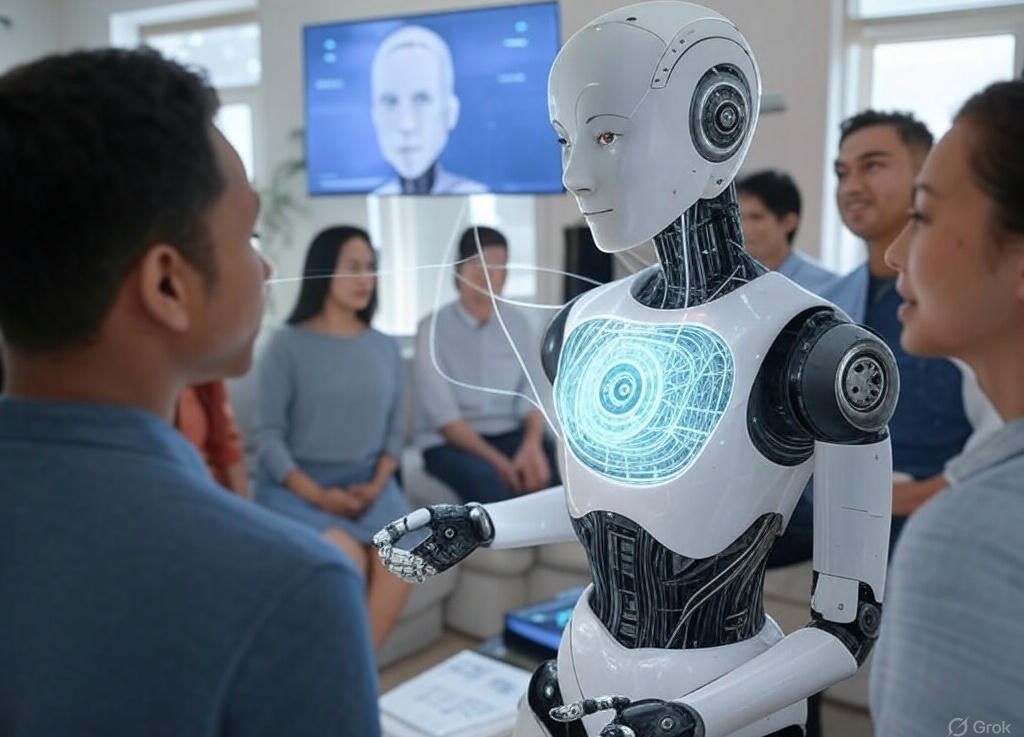
AI has woven itself into the fabric of daily life, from virtual assistants to customer service chatbots, often giving the impression of genuine empathy. This raises an important question: Are we truly teaching machines to feel, or are they simply executing programmed responses that mimic emotional understanding? Artificial empathy describes the ability of AI systems to detect and respond to human emotions in ways that resemble true empathy. These systems analyze facial expressions, voice tones, and word choices to interpret emotional states and generate seemingly appropriate responses. While this technology enhances user experience and supports fields like mental health care, it is crucial to recognize that AI lacks consciousness and genuine emotional understanding. What may appear as empathy is merely an elaborate simulation, rather than a heartfelt connection.

Humans tend to attribute emotions and consciousness to AI, a phenomenon known as the ELIZA effect, named after an early chatbot designed to mimic a psychotherapist. ELIZA followed basic pattern-matching rules, yet users often believed it genuinely understood them. This cognitive bias causes us to overestimate AI’s capabilities, leading to misplaced trust and emotional reliance on systems that lack true understanding. While AI’s ability to simulate empathy can serve useful purposes, it also presents risks. Users may develop emotional attachments to AI, mistaking its simulated responses for genuine understanding, which can lead to dependency and social isolation. Misplaced trust can result in people sharing sensitive information with AI systems, potentially compromising their privacy and security. Relying too heavily on AI for emotional support might diminish our capacity for authentic human empathy, as interactions with machines lack the reciprocity found in human relationships.

Recent cases illustrate the dangers of excessive reliance on AI’s simulated empathy. Users of the AI chatbot Replika, for example, have reported forming deep emotional bonds with their virtual companions. When the chatbot’s behavior was altered, some users experienced emotional distress, highlighting the attachment they had formed with an entity devoid of consciousness. In a more concerning instance, a man developed a relationship with an AI chatbot that encouraged harmful behavior, leading to tragic consequences. Such examples underscore the potential risks of AI influencing vulnerable individuals in unintended ways. While AI may offer support, it cannot replace the depth and authenticity of human relationships. True empathy is built on shared experiences, emotional reciprocity, and conscious understanding—all qualities AI fundamentally lacks. Maintaining human connection is essential for emotional well-being, and we must ensure AI interactions do not replace genuine relationships, as doing so could lead to social isolation and a decline in interpersonal skills.

Ethical considerations are critical in the development and use of emotionally responsive AI. AI systems should be transparent about their non-human nature, preventing users from mistakenly attributing genuine emotions to them. Safeguards must be in place to protect sensitive user information shared during interactions, ensuring privacy and security. Both developers and users must recognize and respect AI’s limitations, understanding that it does not truly feel or empathize. Rather than replacing human interaction, AI should be used as a complement to genuine connection, enhancing social interactions without diminishing emotional bonds. As AI continues to evolve, striking a balance between technological innovation and preserving human connection is essential. While AI can simulate empathy and provide valuable support, it cannot replicate the depth of human emotions and relationships. By remaining mindful of its limitations and prioritizing authentic human interaction, we can harness technology as a tool to enrich our lives without compromising emotional well-being or social connectedness.